Balanced 1-Week Meal Plan: Breakfast, Lunch, Dinner
What should a balanced one-week healthy meal plan include for breakfast, lunch, dinner, and snacks?
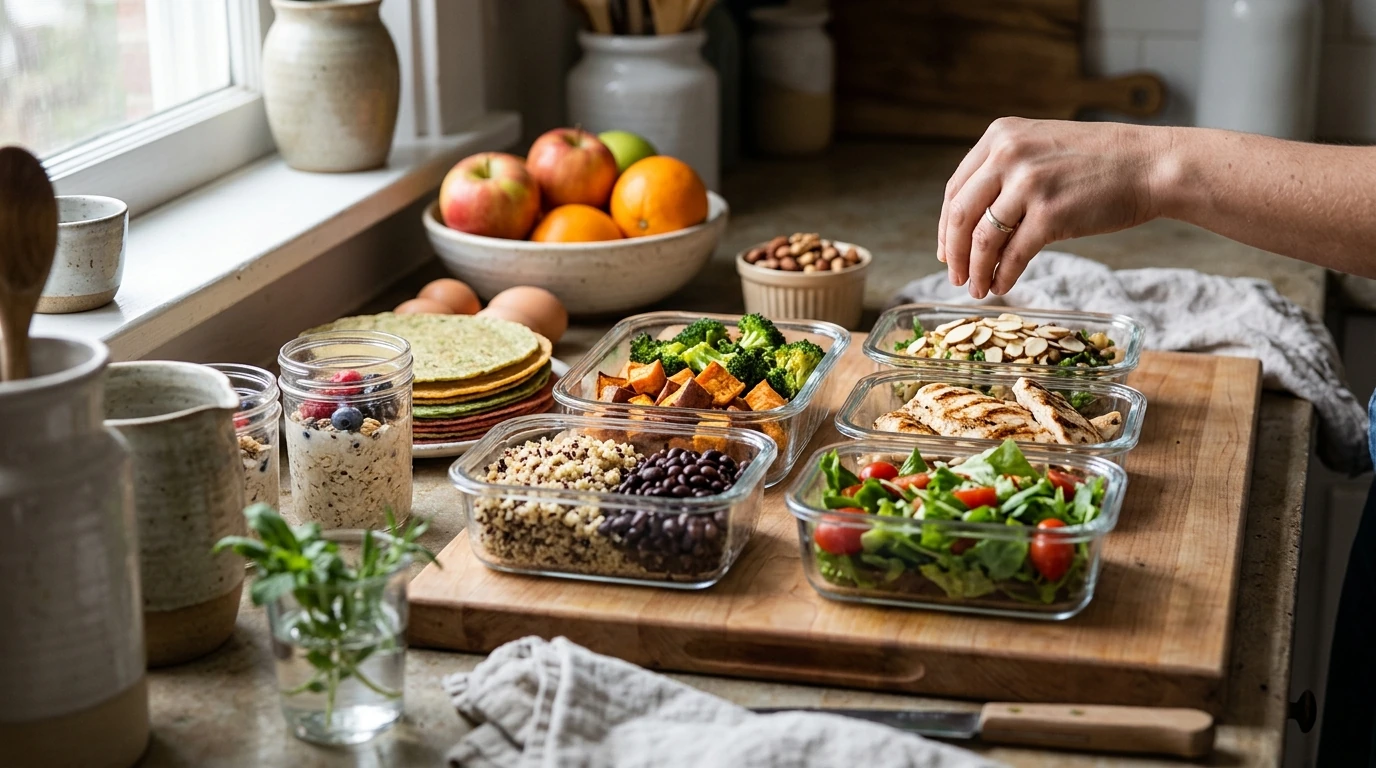
A balanced one-week healthy meal plan should rotate nutrient-dense foods that cover protein, fiber-rich carbs, healthy fats, and plenty of produce—without making every day feel identical. Aim to build each meal with a simple “plate” approach: 1/2 non-starchy vegetables or fruit, 1/4 lean protein, 1/4 whole grains or starchy vegetables, plus a small portion of healthy fat.
Breakfast: steady energy + protein
Include 20–30 grams of protein most mornings (eggs, Greek yogurt, cottage cheese, tofu scramble, protein oats) paired with high-fiber carbs (oats, whole-grain toast, berries) and a fat source (nuts, chia, avocado). Rotate options like overnight oats, veggie omelets, yogurt bowls, and smoothies with spinach and nut butter.
Lunch: balanced and meal-prep friendly
Build lunches around lean protein (chicken, tuna, beans, lentils, turkey, tempeh) and colorful vegetables (salads, roasted veggies, soups). Add a whole grain (brown rice, quinoa, whole-wheat wrap) and a healthy fat (olive oil dressing, seeds). Make two or three lunch “bases” and swap flavors with herbs, salsas, and different veggies.
Dinner: vegetables first, then protein and smart carbs
Plan dinners with a vegetable-forward main (sheet-pan roasted veggies, stir-fry, big salad) plus a protein (salmon, shrimp, lean beef, tofu, beans) and a moderate portion of whole grains or starchy veggies (sweet potato, farro). Include at least one plant-based dinner and one fatty-fish dinner each week for variety.
Snacks: fill gaps, don’t replace meals
Choose snacks that combine protein and fiber: apple with peanut butter, hummus with carrots, edamame, a handful of nuts with fruit, or Greek yogurt. Keep portions reasonable and use snacks to bridge long gaps between meals.
For a more detailed one-week layout and mix-and-match ideas, visit the full guide here.
FAQ
How can I make a healthy meal plan on a budget?
Use affordable staples like beans, lentils, eggs, oats, frozen vegetables, and in-season fruit. Plan 2–3 core proteins and grains for the week, then vary flavors with spices and sauces to reduce waste.












Leave a comment